This blog has been interestingly different than its original intent. The original purpose was to have a chance to write about Georgian culture and the TLG program, mainly to potential volunteers, and secondly for the interest of my family and friends. But when I found it easier to make my own blog, separate from the CCI/Greenheart Travel page, I ended up making it essentially a "what's up with Theophilos" blog, knowing that my audience was primarily now family and friends. Now I wish to twist the purpose for a moment and use this as a chance to give a response to a book. It was lent to me by a wonderful American volunteer in the nearby village/town who has been attending Church (i.e., Orthodox) every Sunday and with whom I've been discussing Orthodoxy. It's called "Love Wins" and is by Rob Bell. As she warned me that I probably would disagree with a lot of it (nor does she agree with all of it), and that many have dubbed him a "heretic" because of this book (a "heretic" of Christianity in general, one must suppose; though it's impossible to be a heretic of so broad a range of beliefs as of all those different churches, groups and sects that use the name), I knew I would have a lot to say when she asked me to read it and give my opinion. As the title sounded a bit familiar (and I really don't keep up whatsoever on protestant literature, as an Orthodox Christian), it must be at least somewhat popular in parts of the Western Christian community, and I can think of a few of my readers that might have read it. As such, I figured that as I read, I'll write down my responses (I would have done that regardless so that I don't forget anything when I next talk to the aforementioned volunteer again next), and then post them online for whoever might be interested. If you're not, forgive my assumption and hubris in my opinions (even if you are going interested, please forgive me that, for I know it's present), and you can stop reading now, and can ignore all my subsequent posts under the same title. If you are going to read it, don't judge Orthodox Christianity by any theological errors I might write into my response. I cannot speak for the Church (no one person can, even the saints; it's the consensus of the saints that we Orthodox trust as the continual working of the Spirit, and individual saints sometimes even have theological errors, whereas the consensus is very clear on everything); as such, don't think of this as the Orthodox perspective, but merely as the perspective of one striving Orthodox Christian. [I can also now note, as I have finished the series, that I have not been able to explain myself as I would like. I have noticed in talking to the aforementioned volunteer about the book that there are many aspects that I did not stress in the same way in talking as in writing or cover particularly clearly or in-depth in this written series; thus it may be easy to misinterpret or take things out of content from the intent I had while writing--I likely took some things out of context or misinterpreted parts of Mr. Bell's work as well; forgive me if I thus misrepresent his views.] [Also forgive the format; each new paragraph is a new point that came up in my reading, generally, and thus a new paragraph could seem to come out of the blue and have nothing to do with the previous ones. As always, I use parentheses in normal writing from the original, and brackets for things I think to add now as I type it into the computer, after the original handwriting of it.]
Preface:
Well, from the start I'm worried about the tone. "Jesus's story" isn't what interests us as real Christians, but Jesus' real life and actions both as the Word before all ages; through the act of Creation, that others may be able to share in Life and Love; through the pillar of fire in the wilderness, the judges and kings and prophets and the Levitical priesthood, guiding and correcting us even after we sinned, fell away, and showed ourselves to reject Him constantly; at His extreme humility in restoring our fallen nature through His Incarnation; His extreme Love which He showed in His words and actions in the flesh; His taking on of one of our sin--and its destruction thereby--as a blameless Pascha Lamb on the Cross; His Resurrection, breaking the bonds of Death and perfecting our bodies; His Ascension, taking human flesh to the right hand of the Father; His vouchsafing and sending of His Spirit [though I should note that Orthodox believe the Spirit proceeds from the Father, not from the Father and the Son, as most Western Christians do; but see the Traditional Orthodox Theology on this point, not me]; His continued Love for us and Mercy in everything and at all times--this continuing, uninterrupted flow of His Very Self unto us is the focus, not merely the text of His historical time on Earth. If viewed as a "story," something separate from life now and something concluded, then we misunderstand Jesus' power and the very "story" we praise. We must be careful to worship the Word Incarnate, not the written Word, important as it is as Divine Scripture.
Now, about these questions, which do indeed matter immensely, and which many share unanswered--about judgement, heaven and hell, a Loving God yet hatred existing on Earth, and all the rest--why do you think you can give any different answer than the thousands who came before you, coming from the same source of reasoning--fallen human logic and reasoning? With this, none can come to a real answer, and as such, each protestant sect has its own versions of "obvious" truths and interpretations, somehow in hubris ignoring the fact that the mere existence of so many different denominations, all using essentially the same tools of discernment--that is, primarily fallen human emotion and/or fallen human reasoning--proves that it is an invalid, fickle tool for discerning the One Absolute Truth of God which transcends all human understanding and can only be understood by revealed grace. What's the answer, then? Well, the only Church that hasn't given into a scholastic method of discerning theology--which happens to be the same Church which has been handed down without theological change or alteration, based on the work of the Holy Spirit through the saints, the Tradition of the Church founded by Christ and the giving of this Spirit upon His Apostles and their successors, in continuous theological agreement through the power of this Spirit--the only Church which has existed since the time of Christ which neither gave in to Papal infallibility, scholasticism and legalism, and even torture and murders as methods of "evangelism" (i.e., Roman Catholicism), nor to warped views of God or worship never taught by the Apostles and rejected quickly by the Church, which has held this fast confession throughout the ages even until now (e.g., Oriental Orthodoxy, though there are stranger ones, too, like the Gregorians of Armenia). This is the very Church which gives us the Bible which protestants value to the exclusion of the Church from which it proceeds in a complete reversal of logic. [Though I should note that it's not the same Bible as Luther held, who, rejecting much of the tradition of the Church (and his later followers moreso) changed the books he considered acceptable (aren't we supposed to change our conform our minds to Scripture, not the other way around?--this is scholasticism at one of its worst points); some of these changes stuck and some didn't--for example, he hated the book of James and said he would rather have not had it in the Bible. Yet even Lutherans still have it in their Bible, and somehow still think that Luther is the one whose interpretation we should follow (which again contradicts itself, as he preached Sola Scripture, not "Sola Scrpiture plus my own opinions and exegesis"--note the impossibility of true Sola Scriptura (for one thing, as the Bible affirms keeping written and oral tradition and exegesis, and also because it's impossible not to interpret it, if nothing else, from our own biases, experiences, and thoughts). And I say this knowing what I'm talking about, as a former Lutheran, and one who was studying for the Lutheran ministry before having my eyes opened to the humbling truth of the Holy Spirit revealed through the Church to which we should, rather than following our own thoughts and wills, submit ourselves. And now, after this aside, back to what I was originally talking about:] This Bride of Christ of which I speak is the Eastern Orthodox Orthodox Church, Chalcedonian, Apostolic, and Catholic (not Roman Catholic, but in the actual definition and meaning of the word itself) [all the Churches that belong to this Church (I note this as there are a few so-called "Orthodox" churches that are impostors) are in communion with the Patriarchate of Constantinople]. Without one's will in complete submission to its teachings, being led astray by not cutting off our wills for God's (revealed through the Church), it is impossible not to fall into at least some error--and any error in theology can be mortal. And personally, I must note that your saying that God's response to our questioning and thirsting for Truth is to ask for our own opinion is just stupid. An Omniscient God and Father sees His children stumbling along the edge of a precipice toward the light, blinded by their fallenness, and asks them, "What do you think you see?" What kind of monster-god would leave us to our own fallen devices, incapable as we are of seeing beyond the material (or even that, I should add) without His aid? No, He reveals Truth to those willing to listen, cut off their wills, and suffer for Him--for without temptations and sufferings no one can be saved (cf. St. Anthony the Great, amongst others), loving Himself more than God His Creator, in his fallen blindness. Why does He not reveal it all at once? If our own eyes on Earth need time to adjust from pitch-blackness to the brightness of a fallen sun, how much more do we need to be led gradually as babies toward adulthood spiritually; to have our spiritual eyes thus opened? To reveal Himself all at once to those not really willing to love Him more than themselves or still unsure, such a revelation would force worship--but only as a façade; for respecting the very good free will He created in us, He knows that a love forced is not a love at all, and a knee bowed not out of love and faith, but out of knowledge of power alone, is a knee bowed in seeming, but with a heart turned away in loathing (cf. Rom 14:11, Php 2:10, Is 45:23). As such, God our Father neither silently leaves us, asking for answers, to our own devices, nor as Pure Light, reveals Himself all at once to the pain of our eyes, yet still in great darkness.
Saying there are any issues in how we live toward God and understand Who He really is are "in the end, not that essential" is scary for so many reasons that I'm not even going to try to go into each of them one by one. Obviously spilling blood over such a thing (or in general forfeiting love over it) is to miss the point completely, but that is the only point in this argument I can agree with you on.
The "historic, orthodox faith" is "deep, wide," and "nothing[...that] hasn't been taught, suggested, or celebrated by many before"--but that is the Orthodox Church's theology, which is not something which can be discovered with fallen resources alone (though those, by God's direction, can lead us to the Church which He uses as His vessel, and which, by submitting to it in exclusion of our own wants and wills and thoughts, can grant us this theology). This true Theology, I can sadly note from this preface, is not likely to be much akin to what you are about to teach.
And that's my response to the 5-page preface. Getting through the 198 pages of the book itself could take a while. But until next time...
In Christ,
Teopile/Theophilos Porter
Preface:
Well, from the start I'm worried about the tone. "Jesus's story" isn't what interests us as real Christians, but Jesus' real life and actions both as the Word before all ages; through the act of Creation, that others may be able to share in Life and Love; through the pillar of fire in the wilderness, the judges and kings and prophets and the Levitical priesthood, guiding and correcting us even after we sinned, fell away, and showed ourselves to reject Him constantly; at His extreme humility in restoring our fallen nature through His Incarnation; His extreme Love which He showed in His words and actions in the flesh; His taking on of one of our sin--and its destruction thereby--as a blameless Pascha Lamb on the Cross; His Resurrection, breaking the bonds of Death and perfecting our bodies; His Ascension, taking human flesh to the right hand of the Father; His vouchsafing and sending of His Spirit [though I should note that Orthodox believe the Spirit proceeds from the Father, not from the Father and the Son, as most Western Christians do; but see the Traditional Orthodox Theology on this point, not me]; His continued Love for us and Mercy in everything and at all times--this continuing, uninterrupted flow of His Very Self unto us is the focus, not merely the text of His historical time on Earth. If viewed as a "story," something separate from life now and something concluded, then we misunderstand Jesus' power and the very "story" we praise. We must be careful to worship the Word Incarnate, not the written Word, important as it is as Divine Scripture.
Now, about these questions, which do indeed matter immensely, and which many share unanswered--about judgement, heaven and hell, a Loving God yet hatred existing on Earth, and all the rest--why do you think you can give any different answer than the thousands who came before you, coming from the same source of reasoning--fallen human logic and reasoning? With this, none can come to a real answer, and as such, each protestant sect has its own versions of "obvious" truths and interpretations, somehow in hubris ignoring the fact that the mere existence of so many different denominations, all using essentially the same tools of discernment--that is, primarily fallen human emotion and/or fallen human reasoning--proves that it is an invalid, fickle tool for discerning the One Absolute Truth of God which transcends all human understanding and can only be understood by revealed grace. What's the answer, then? Well, the only Church that hasn't given into a scholastic method of discerning theology--which happens to be the same Church which has been handed down without theological change or alteration, based on the work of the Holy Spirit through the saints, the Tradition of the Church founded by Christ and the giving of this Spirit upon His Apostles and their successors, in continuous theological agreement through the power of this Spirit--the only Church which has existed since the time of Christ which neither gave in to Papal infallibility, scholasticism and legalism, and even torture and murders as methods of "evangelism" (i.e., Roman Catholicism), nor to warped views of God or worship never taught by the Apostles and rejected quickly by the Church, which has held this fast confession throughout the ages even until now (e.g., Oriental Orthodoxy, though there are stranger ones, too, like the Gregorians of Armenia). This is the very Church which gives us the Bible which protestants value to the exclusion of the Church from which it proceeds in a complete reversal of logic. [Though I should note that it's not the same Bible as Luther held, who, rejecting much of the tradition of the Church (and his later followers moreso) changed the books he considered acceptable (aren't we supposed to change our conform our minds to Scripture, not the other way around?--this is scholasticism at one of its worst points); some of these changes stuck and some didn't--for example, he hated the book of James and said he would rather have not had it in the Bible. Yet even Lutherans still have it in their Bible, and somehow still think that Luther is the one whose interpretation we should follow (which again contradicts itself, as he preached Sola Scripture, not "Sola Scrpiture plus my own opinions and exegesis"--note the impossibility of true Sola Scriptura (for one thing, as the Bible affirms keeping written and oral tradition and exegesis, and also because it's impossible not to interpret it, if nothing else, from our own biases, experiences, and thoughts). And I say this knowing what I'm talking about, as a former Lutheran, and one who was studying for the Lutheran ministry before having my eyes opened to the humbling truth of the Holy Spirit revealed through the Church to which we should, rather than following our own thoughts and wills, submit ourselves. And now, after this aside, back to what I was originally talking about:] This Bride of Christ of which I speak is the Eastern Orthodox Orthodox Church, Chalcedonian, Apostolic, and Catholic (not Roman Catholic, but in the actual definition and meaning of the word itself) [all the Churches that belong to this Church (I note this as there are a few so-called "Orthodox" churches that are impostors) are in communion with the Patriarchate of Constantinople]. Without one's will in complete submission to its teachings, being led astray by not cutting off our wills for God's (revealed through the Church), it is impossible not to fall into at least some error--and any error in theology can be mortal. And personally, I must note that your saying that God's response to our questioning and thirsting for Truth is to ask for our own opinion is just stupid. An Omniscient God and Father sees His children stumbling along the edge of a precipice toward the light, blinded by their fallenness, and asks them, "What do you think you see?" What kind of monster-god would leave us to our own fallen devices, incapable as we are of seeing beyond the material (or even that, I should add) without His aid? No, He reveals Truth to those willing to listen, cut off their wills, and suffer for Him--for without temptations and sufferings no one can be saved (cf. St. Anthony the Great, amongst others), loving Himself more than God His Creator, in his fallen blindness. Why does He not reveal it all at once? If our own eyes on Earth need time to adjust from pitch-blackness to the brightness of a fallen sun, how much more do we need to be led gradually as babies toward adulthood spiritually; to have our spiritual eyes thus opened? To reveal Himself all at once to those not really willing to love Him more than themselves or still unsure, such a revelation would force worship--but only as a façade; for respecting the very good free will He created in us, He knows that a love forced is not a love at all, and a knee bowed not out of love and faith, but out of knowledge of power alone, is a knee bowed in seeming, but with a heart turned away in loathing (cf. Rom 14:11, Php 2:10, Is 45:23). As such, God our Father neither silently leaves us, asking for answers, to our own devices, nor as Pure Light, reveals Himself all at once to the pain of our eyes, yet still in great darkness.
Saying there are any issues in how we live toward God and understand Who He really is are "in the end, not that essential" is scary for so many reasons that I'm not even going to try to go into each of them one by one. Obviously spilling blood over such a thing (or in general forfeiting love over it) is to miss the point completely, but that is the only point in this argument I can agree with you on.
The "historic, orthodox faith" is "deep, wide," and "nothing[...that] hasn't been taught, suggested, or celebrated by many before"--but that is the Orthodox Church's theology, which is not something which can be discovered with fallen resources alone (though those, by God's direction, can lead us to the Church which He uses as His vessel, and which, by submitting to it in exclusion of our own wants and wills and thoughts, can grant us this theology). This true Theology, I can sadly note from this preface, is not likely to be much akin to what you are about to teach.
And that's my response to the 5-page preface. Getting through the 198 pages of the book itself could take a while. But until next time...
In Christ,
Teopile/Theophilos Porter


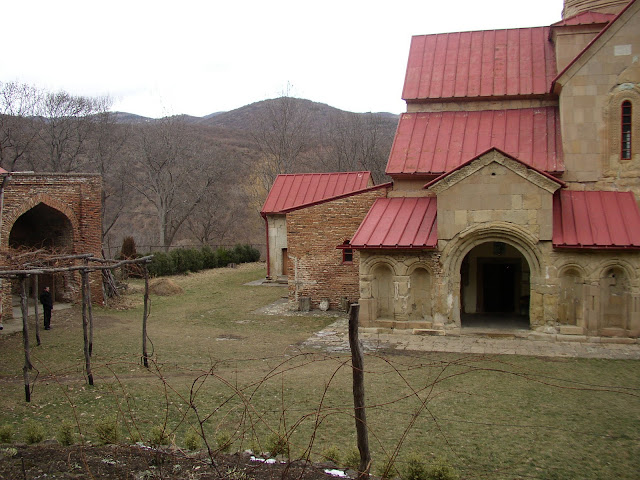


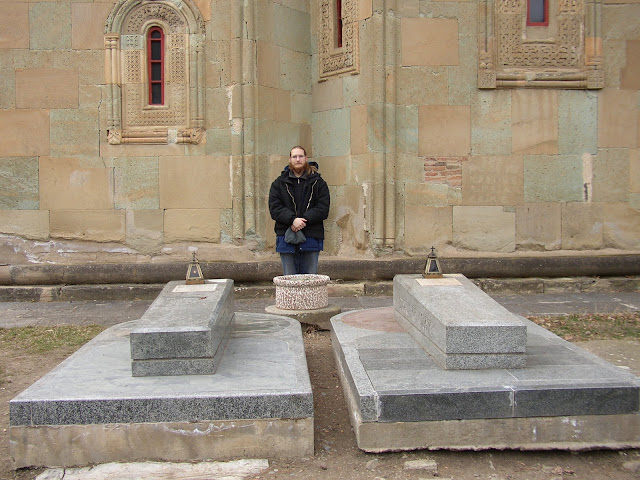


 So anyway, that's all the pictures I've taken since my last photoentry. I hope you enjoyed them!